
A hospital visit in China for foreign tourists can feel intimidating, especially when a young child becomes sick during an overseas vacation. Language differences, unfamiliar hospital procedures, medical costs, and travel schedules can all add to the stress.
But what actually happens when an international visitor needs medical attention in China?
A Malaysian family’s shared travel experience in Chongqing offers an interesting example. During a five-day trip to China, their two-year-old daughter developed repeated vomiting shortly before the family was scheduled to fly home.
What followed was an unexpected hospital visit involving passport registration, digital payments, medical examinations, and a last-minute return to the airport.
Their experience also offers useful lessons for international travelers preparing to visit China.
Editor’s note: This article is an independently rewritten educational account based on a traveler’s personal description. MedBridge China did not arrange or participate in the family’s medical care. The reported details, prices, and outcome have not been independently verified.
A Family Vacation in Chongqing Takes an Unexpected Turn
A Malaysian family traveled to Chongqing, China, for a five-day, four-night vacation with their two-year-old daughter.
The trip included sightseeing and various unexpected travel experiences. However, the most stressful moment came on their final night.
According to the family’s account, their daughter began vomiting repeatedly during the night.
Initially, she vomited milk. Later, she continued vomiting even when she had consumed little.
Her parents remained awake throughout the night, monitoring her condition and considering whether she needed medical attention.
By the following morning, the child appeared more comfortable and was able to rest.
The family initially hoped that the symptoms had resolved.
However, after arriving at the airport for their return flight, their daughter vomited again.
Concerned about her condition during the upcoming flight, the parents approached the airport medical service.
Staff reportedly recommended that the child receive an assessment at a nearby hospital before traveling.
The family then decided to seek medical care.

Hospital Visit in China for Foreign Tourists: Where Did the Family Go?
The family reported visiting the Third Affiliated Hospital of Chongqing Medical University, located within a short drive of the airport.
Because the parents could communicate in Chinese, they were able to navigate the hospital without arranging an interpreter.
For foreign visitors who do not speak Chinese, the experience may be different.
Some Chinese hospitals offer international medical departments, multilingual assistance, or interpretation services. However, these services are not available at every hospital.
International travelers should confirm language support and registration requirements before visiting whenever circumstances allow.
For urgent medical situations, obtaining appropriate medical attention should take priority over finding a hospital with special international services.
How Can Foreign Tourists Register at a Chinese Hospital?
One of the most useful parts of the family’s account was their description of hospital registration.
They reported using a passport to register their daughter for a pediatric consultation.
The registration fee was approximately RMB 15.
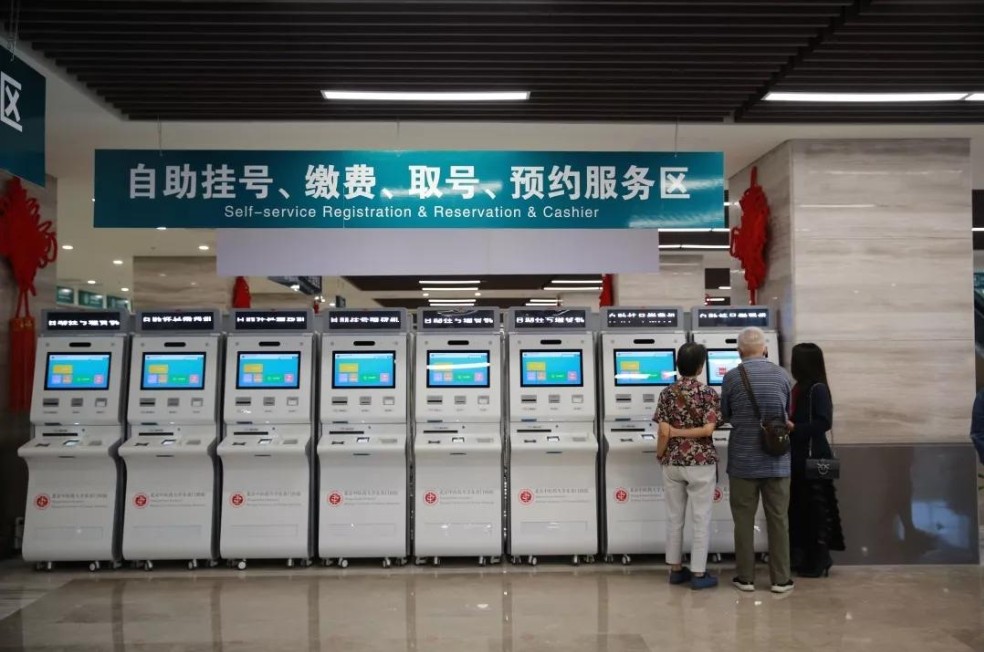
The family also described a relatively straightforward digital process for paying medical fees and receiving queue information.
Step 1: Present Identification
Foreign patients may be asked to provide their passports or other accepted identification documents.
For children, hospitals may also request information from a parent or guardian.
Registration requirements vary by hospital.
Step 2: Register for the Appropriate Department
Patients are usually directed to a department based on their symptoms or medical needs.
In this case, the family registered for pediatrics because the patient was a young child.
Step 3: Pay the Registration Fee
Depending on the hospital, payment may be available through staffed counters, self-service machines, or supported digital payment platforms.
Some facilities accept international bank cards, but payment options vary.
Step 4: Wait for the Consultation
After registration, patients receive information about their consultation or queue.
Waiting times depend on the hospital, department, and number of patients.
The family’s experience was relatively efficient, but travelers should not assume that all Chinese hospitals have similarly short waiting times.
Medical Tests and Digital Payments: What Happened Next?
According to the family’s account, the doctor recommended blood testing and an ultrasound examination.
The parents reported paying approximately RMB 162 for the tests.
They also described using a QR code to make payments and retrieve examination results.
The family said the blood test results became available in less than an hour.
They then returned to the doctor for further assessment.
Following the consultation, the parents reported that the doctor did not identify a serious immediate concern and prescribed medication.
The reported medication cost was approximately RMB 7.
The family described the hospital’s digital systems as convenient and easier to navigate than they had expected.
However, medical testing, treatment decisions, and discharge advice always depend on an individual clinical assessment.
A positive outcome in one family’s experience should not be interpreted as medical guidance for another child with similar symptoms.
How Much Did the Hospital Visit Cost?
Medical expenses are a major concern for international travelers.
In this particular account, the family reported the following costs:
| Medical service | Reported cost |
|---|---|
| Pediatric registration | RMB 15 |
| Blood test and ultrasound | RMB 162 |
| Prescribed medication | RMB 7 |
| Total reported expense | RMB 184 |
These amounts are taken from the traveler’s personal account and have not been independently verified.
They are not official hospital quotations or representative prices for pediatric treatment throughout China.
Actual expenses can vary significantly depending on the hospital, medical condition, required tests, medication, insurance arrangements, and whether emergency services are needed.
International patients should request a detailed estimate whenever possible and retain receipts for potential insurance claims.
What Happens If a Child Gets Sick Before a Flight in China?
The family’s medical emergency occurred just before their scheduled departure.
After the hospital visit, they returned to the airport and reported boarding their flight shortly before departure.
Although they were relieved to complete their journey, their experience raises an important question for international travelers:
What should you do if a medical problem affects your flight?
Contact the Airline as Early as Possible
If a traveler becomes too unwell to fly, the airline should be contacted before departure whenever possible.
Explain the medical situation and ask about the airline’s policies for illness-related changes, cancellations, or refunds.
Request Appropriate Medical Documentation
Depending on the circumstances, the airline may request a medical certificate or other supporting documents.
Medical documentation should accurately reflect the clinician’s assessment.
Confirm the Airline’s Refund Rules
The Malaysian family reported being told that a medical certificate could support a refund request under certain circumstances.
However, a full refund is not guaranteed.
Eligibility depends on the airline’s rules, ticket conditions, medical documentation, and applicable policies.
Prioritize Medical Fitness to Fly
A traveler should not rush to board an aircraft if a medical professional advises against flying.
For a young child experiencing repeated vomiting, a clinician should assess concerns such as dehydration and whether travel is appropriate.
Hospital Visit in China for Foreign Tourists: Travel Insurance Tips
After returning home, the family planned to submit a travel insurance claim.
This is another useful reminder for international travelers.
Travel insurance may help cover eligible emergency medical expenses, depending on the policy.
Before traveling to China, visitors should review whether their insurance includes:
- Emergency outpatient consultations
- Hospital examinations and prescribed medication
- Pediatric medical care
- Medical transportation when necessary
- Trip interruption or cancellation
- Emergency assistance and interpretation
Travelers should retain medical reports, payment receipts, prescriptions, and relevant airline communications.
Insurance reimbursement is subject to the policy’s terms, exclusions, documentation requirements, and claims assessment.
Is Healthcare in China Accessible to International Visitors?
Planning a hospital visit in China for foreign tourists involves understanding registration procedures, language assistance, payment options, and access to appropriate medical care. Preparing for these practical details can help international visitors navigate an unfamiliar healthcare system.
China has a large healthcare system that includes public hospitals, specialist centers, private medical facilities, and hospitals offering international services.
Many hospitals use digital systems for registration, payments, medical records, and examination reports.
These systems can make certain processes more convenient, but foreign visitors may encounter challenges.
Common concerns include:
Language Barriers
Medical instructions, registration forms, and digital interfaces may primarily be in Chinese.
Choosing the Right Hospital
Visitors may not know which facility is suitable for their symptoms or whether international patient services are available.
Payment Methods
Digital payment systems are widely used, but not every payment method works for every international visitor.
Medical Documentation
Patients may need assistance understanding medical reports, prescriptions, and follow-up instructions.
Travel Coordination
Unexpected medical appointments can affect airport transfers, hotel bookings, and flight schedules.
Planning ahead can reduce confusion when medical attention becomes necessary.
How MedBridge China Supports International Patients
The Malaysian family’s experience took place in Chongqing and was not arranged by MedBridge China.
For international visitors planning healthcare appointments in Guangzhou and the Guangdong–Hong Kong–Macao Greater Bay Area, MedBridge China provides medical travel coordination and patient support services.
Our services may include:
- Medical appointment coordination
- Assistance communicating with healthcare institutions
- Medical interpretation and language support
- Airport reception and local transportation coordination
- Travel and accommodation assistance
- Follow-up communication support
We help international patients navigate practical arrangements while medical decisions remain the responsibility of qualified healthcare professionals.
Visitors planning preventive healthcare can also explore our comprehensive health checkup services in China.
Website: https://medbridgegba.com

Frequently Asked Questions About Hospital Visits in China
Can foreign tourists go to hospitals in China?
Yes. Foreign visitors can generally seek medical care at hospitals in China, subject to the facility’s registration procedures and service availability.
Can foreigners use a passport to register at a Chinese hospital?
Many hospitals accept passports for foreign patient registration. Requirements may differ between facilities, and additional information may be needed for children.
Are hospitals in China expensive for tourists?
Costs vary by hospital, medical service, and individual condition. The Malaysian family reported paying RMB 184 for their visit, but this should not be treated as a general price estimate.
Do Chinese hospitals have English-speaking doctors?
Some hospitals and international medical departments offer English-speaking staff or interpretation support. Availability should be confirmed in advance when possible.
Can tourists use travel insurance for hospital treatment in China?
Depending on the policy, travel insurance may cover eligible medical expenses. Patients should keep receipts and medical records and confirm coverage with their insurer.
What should I do if my child becomes sick while traveling in China?
Seek appropriate medical advice promptly, especially if symptoms persist or worsen. Repeated vomiting, difficulty keeping fluids down, unusual sleepiness, or signs of dehydration warrant timely assessment. In a medical emergency in mainland China, call 120.
For official travel and emergency information, visitors can also consult the China National Immigration Administration website.
Final Thoughts: Preparing for Unexpected Medical Needs in China
A hospital visit in China for foreign tourists does not always have to be complicated. Understanding how hospital registration, medical payments, and travel insurance work can help international visitors prepare for unexpected healthcare needs.
This Malaysian family’s experience illustrates how an unexpected hospital visit can become part of an international travel journey.
According to their account, passport registration, digital payments, medical testing, and electronic reports helped them navigate the process.
Their experience was reassuring, but it does not mean every hospital visit will be equally fast, inexpensive, or straightforward.
For foreign travelers, the most important lessons are to prepare identification and insurance information, understand available medical services, seek timely professional care, and keep essential medical documentation.
Planning a medical visit to China?
MedBridge China can help international patients coordinate consultations, appointments, interpretation, and travel arrangements in Guangzhou and the Greater Bay Area.
Visit https://medbridgegba.com to learn more.
Disclaimer: This article is for general educational and travel-information purposes only. It is not medical advice. The family experience is based on an unverified personal account, and MedBridge China does not claim to have treated, represented, or coordinated care for the individuals described.