
A TCM experience in China can offer international visitors an opportunity to discover traditional wellness practices while learning more about Chinese culture.
For many people unfamiliar with Traditional Chinese Medicine (TCM), their first encounter may involve Tuina massage, herbal wellness activities, or an introduction to traditional theories about the body.
In October 2025, a cultural experience event in Suzhou brought together international residents and students from several countries. Participants explored Chinese wellness traditions through guided activities, hands-on demonstrations, and conversations with healthcare professionals.
Their experience provides an interesting example of how Traditional Chinese Medicine can become part of a cultural visit to China.
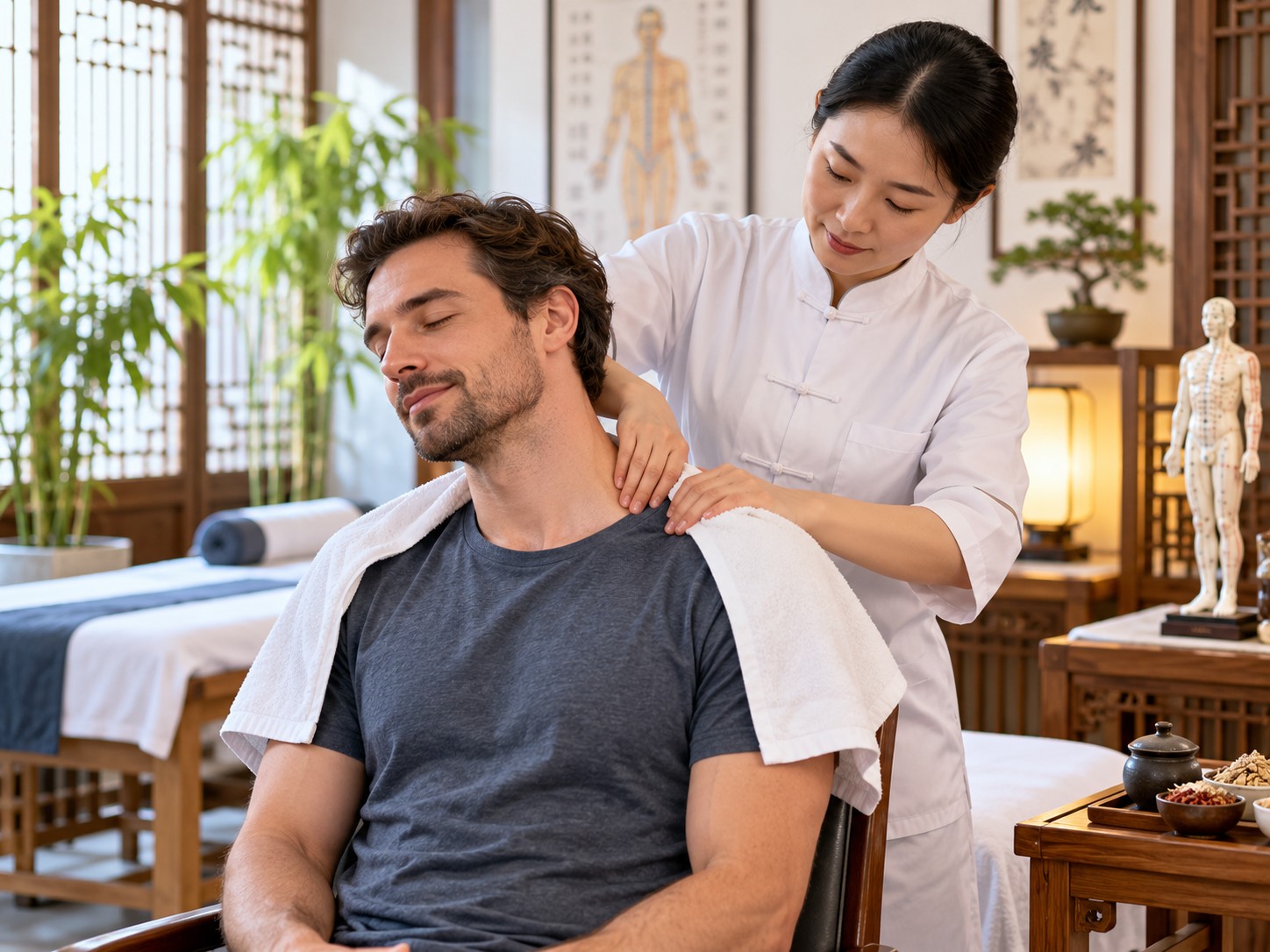
A TCM Experience in China: Foreign Visitors Gather in Suzhou
According to a local news report published on October 21, 2025, a group of foreign residents and international students attended a Traditional Chinese Medicine cultural experience at Yiyuan Garden in Suzhou.
The setting was particularly memorable.
Rather than taking place entirely inside a medical clinic, the activities combined the atmosphere of a traditional Chinese garden with demonstrations of Chinese wellness practices.
Participants explored the garden before attending an introduction to TCM concepts presented by a doctor from Suzhou Hospital of Traditional Chinese Medicine.
The event introduced ideas about traditional approaches to daily wellness and the relationship between lifestyle and health.
Visitors also sampled wellness tea, created herbal massage tools, experienced Tuina massage, and learned about ear acupressure.
The group included participants from the United Kingdom, India, and Iran.
Although their backgrounds differed, they shared an interest in learning about unfamiliar Chinese cultural traditions.
Importantly, this was a cultural education and wellness experience rather than a documented medical treatment program for patients with diagnosed illnesses.
TCM Experience in China: Understanding Tuina Massage
Tuina is a traditional Chinese manual therapy involving techniques such as pressing, kneading, rubbing, and pushing.
It is commonly associated with Traditional Chinese Medicine and may be offered in clinical or wellness settings, depending on the provider and the purpose of the session.
Unlike a general relaxation massage, clinical Tuina may involve a more structured assessment and techniques selected for a particular concern.
However, methods and professional qualifications can vary between providers.
For more information about Traditional Chinese Medicine, including research evidence and safety considerations, visit the National Center for Complementary and Integrative Health.
How Did the Foreign Visitors Respond to Tuina?
During the Suzhou event, trained practitioners demonstrated Tuina techniques on participants’ shoulders, backs, and waist areas.
The published account described some visitors as initially uncertain about what the experience would feel like.
As the demonstrations continued, participants appeared more comfortable.
British participant Alex Whitman was among those who expressed enthusiasm after trying the massage.
His reaction was presented as a personal experience, not as evidence that Tuina had treated a medical condition.
This distinction is important for international visitors.
Feeling relaxed after a massage is a subjective experience. It does not establish that the technique can diagnose or cure a disease.
Is Tuina Massage Suitable for Everyone?
Not necessarily.
Some people may need to avoid particular massage techniques or seek medical advice before receiving manual therapy.
For example, recent injuries, fractures, certain bone conditions, active infections, or other medical concerns may make some techniques inappropriate.
Anyone experiencing persistent pain, weakness, numbness, or unexplained symptoms should seek an appropriate medical assessment rather than relying on massage alone.
A qualified practitioner should explain the proposed techniques, discuss relevant health history, and respect the patient’s comfort and consent.
Exploring Herbal Wellness Traditions in China
Another memorable part of the Suzhou event involved making traditional herbal wellness tools.
Participants were guided through a hands-on activity using aromatic materials, including mugwort and mint, which were placed inside fabric coverings to create small herbal massage hammers.
These tools are sometimes associated with traditional Chinese wellness routines.
Indian student Gunjan Yada reportedly enjoyed the fragrance of the materials and the experience of using the handmade tool around her shoulders.
Her response highlighted the cultural and sensory appeal of the activity.
For foreign visitors, experiences like this can be an accessible introduction to Chinese herbal traditions without requiring them to begin a medical treatment.
Are Traditional Herbal Products Always Safe?
No herbal product should automatically be assumed safe simply because it is natural or traditional.
Ingredients may cause allergies, skin irritation, or interactions with medications.
Herbal teas and other ingestible products also require appropriate attention to ingredients, health conditions, and potential interactions.
International visitors should ask what a product contains and avoid using unfamiliar herbal remedies to treat medical conditions without professional guidance.
The cultural activity in Suzhou should not be interpreted as proof of a particular herbal product’s medical benefits.
Ear Seed Therapy: Another Traditional Chinese Wellness Experience
The Suzhou event also introduced participants to ear acupressure, sometimes called ear seed therapy.
In Traditional Chinese Medicine, this practice involves placing small seeds or beads on selected points of the outer ear, usually secured with adhesive patches.
Practitioners may explain the locations of these points using traditional ear charts.
Iranian student Soroush was reportedly surprised by the number of points shown on the ear chart.
After participating in the demonstration, he described feeling refreshed and expressed interest in learning more about Chinese medicine.
His account illustrates curiosity and personal engagement with the practice.
It does not demonstrate that ear seed therapy has produced a clinically verified health outcome.
What Should Visitors Know Before Trying Ear Seeds?
Ear seed therapy is generally non-invasive, but it can still cause discomfort, irritation, or allergic reactions to adhesives or materials.
Visitors should inform the practitioner about skin sensitivities and stop the session if discomfort occurs.
Evidence for specific medical benefits varies, and ear acupressure should not replace established medical care.
For people exploring TCM for the first time, understanding the difference between a cultural demonstration and a medically indicated treatment is essential.
Why International Visitors Choose a TCM Experience in China
A TCM experience in China can appeal to international visitors for several reasons.
Cultural Discovery
Traditional Chinese Medicine is closely connected with Chinese history, philosophy, and everyday cultural practices.
A guided introduction can help visitors understand concepts they may have previously encountered only through books or online videos.
Hands-On Activities
Experiences such as Tuina demonstrations, herbal workshops, and traditional wellness education allow visitors to participate rather than simply observe.
Learning From Qualified Professionals
When healthcare professionals are involved, visitors may have opportunities to ask questions about traditional practices, professional training, and appropriate clinical use.
Combining Culture With Travel
Historic gardens, local food, traditional architecture, and cultural workshops can all form part of a broader China travel experience.
The Suzhou event demonstrated how a traditional garden could provide a setting for cultural education.
However, not every TCM clinic offers tourism activities, and not every cultural experience involves licensed medical treatment.
TCM Experience in Guangzhou and the Greater Bay Area
Although the reported event took place in Suzhou, international visitors may also explore Traditional Chinese Medicine services in Guangzhou and the Guangdong–Hong Kong–Macao Greater Bay Area.
Guangzhou is a major city in southern China with a long history of traditional Chinese medical practice.
Visitors interested in TCM may wish to learn about services such as:
- Tuina massage
- Acupuncture
- Traditional Chinese Medicine consultations
- Moxibustion
- Traditional wellness education
- Individualized advice from appropriately qualified practitioners
The availability and suitability of these services depend on the institution and the patient’s circumstances.
Some visitors may be primarily interested in cultural learning or relaxation, while others may have a specific health concern that requires clinical assessment.
These situations should be handled differently.
Someone seeking treatment for an ongoing medical condition should choose an appropriately licensed healthcare provider and discuss the benefits, limitations, and risks of any proposed therapy.
For a broader introduction to traditional therapies, read our guide to Traditional Chinese Medicine in China.
How Can Foreign Visitors Arrange a TCM Experience in China?
For international visitors, planning ahead can make the experience easier to understand and navigate.
Step 1: Identify Your Purpose
Consider whether you are interested in cultural education, a general wellness experience, or an appointment for a particular health concern.
This distinction helps determine which type of provider is appropriate.
Step 2: Choose a Suitable Institution
Look for a provider with relevant qualifications, clear service descriptions, and appropriate licensing when medical services are involved.
Ask whether the institution regularly receives international visitors.
Step 3: Prepare Relevant Health Information
If you are arranging a medical consultation, bring available medical records, information about medications, allergies, and a description of your symptoms.
A practitioner may need this information to assess whether a particular technique is suitable.
Step 4: Confirm Language Assistance
Some providers may offer English-speaking staff, while others may require interpretation support.
Clarify this before making an appointment, especially when discussing medical symptoms or treatment decisions.
Step 5: Coordinate Travel and Appointments
If your visit involves medical services, leave sufficient time for consultations and any recommended follow-up.
Do not schedule activities that could conflict with medical advice or recovery needs.
How MedBridge China Helps International Visitors Explore TCM Services
MedBridge China focuses on supporting international visitors who are exploring healthcare services in Guangzhou and the Greater Bay Area.
For visitors interested in Traditional Chinese Medicine, coordination support may include:
- Helping clarify the type of TCM service being requested
- Assisting with communication and appointment arrangements
- Helping identify suitable healthcare institutions
- Coordinating medical interpretation when available
- Supporting airport pickup and local transportation arrangements
- Assisting with accommodation and practical travel planning
- Helping organize follow-up information when appropriate
Medical consultations, diagnoses, treatment decisions, and procedures remain the responsibility of appropriately qualified healthcare professionals.
MedBridge China did not organize the Suzhou cultural event and does not claim that the participants were its clients.
Frequently Asked Questions About TCM in China
Can foreigners experience Traditional Chinese Medicine in China?
Yes. International visitors may be able to attend cultural activities, wellness demonstrations, or appointments at qualified TCM institutions. Availability depends on the location and provider.
What is the difference between Tuina and a regular massage?
Tuina uses manual techniques associated with Traditional Chinese Medicine. Clinical Tuina may be selected according to a practitioner’s assessment, while general massage services may focus primarily on relaxation. The exact approach depends on the provider.
Is a TCM experience the same as medical treatment?
No. A cultural workshop or wellness demonstration does not necessarily involve medical diagnosis or treatment. Visitors seeking care for a health condition should consult an appropriately qualified healthcare professional.
Can I try acupuncture and Tuina during the same visit?
Some institutions may offer both services, but whether they are appropriate together depends on individual circumstances and professional assessment.
Do I need a translator for a TCM consultation?
Not always. Some institutions have multilingual staff. However, professional interpretation can be helpful when discussing symptoms, medical history, consent, and follow-up instructions.
Can I combine TCM activities with sightseeing in Guangzhou?
Yes, cultural activities and sightseeing can be planned around a visit. If you are receiving medical treatment, follow your healthcare provider’s recommendations about scheduling, physical activity, and recovery.
Final Thoughts: Discovering Traditional Chinese Medicine Through Cultural Exchange
The Suzhou event shows how a TCM experience in China can bring together people from different cultural backgrounds.
For the foreign participants, the most memorable elements were not limited to massage techniques or traditional wellness tools.
The experience also involved learning, asking questions, discovering unfamiliar practices, and sharing impressions with others.
Tuina massage, herbal activities, and ear acupressure can provide opportunities to learn about Chinese traditions, but personal enjoyment should not be confused with verified medical effectiveness.
For international visitors considering Traditional Chinese Medicine in Guangzhou or the Greater Bay Area, choosing an appropriate provider and understanding the purpose of each service are important first steps.
Interested in exploring Traditional Chinese Medicine services in Guangzhou?
Contact MedBridge China to discuss your interests, appointment coordination needs, language assistance, and practical travel arrangements.
Editorial disclosure: This article is an original educational adaptation of a publicly reported Traditional Chinese Medicine cultural experience held in Suzhou and described in a local news report dated October 21, 2025. The participants were foreign residents and students attending a cultural activity, not documented medical tourists receiving treatment for diagnosed conditions. MedBridge China did not organize the event or provide services to the participants. Their reported impressions have not been independently verified by MedBridge China.
Medical disclaimer: This article is for general education and cultural information only. It is not medical advice. Traditional practices may involve risks and have varying levels of scientific evidence. Consult a qualified healthcare professional before using any therapy for a medical condition.